Showing posts with label tea. Show all posts

Tuesday, November 1, 2016

Grow Your Own Chrysanthemum Tea!

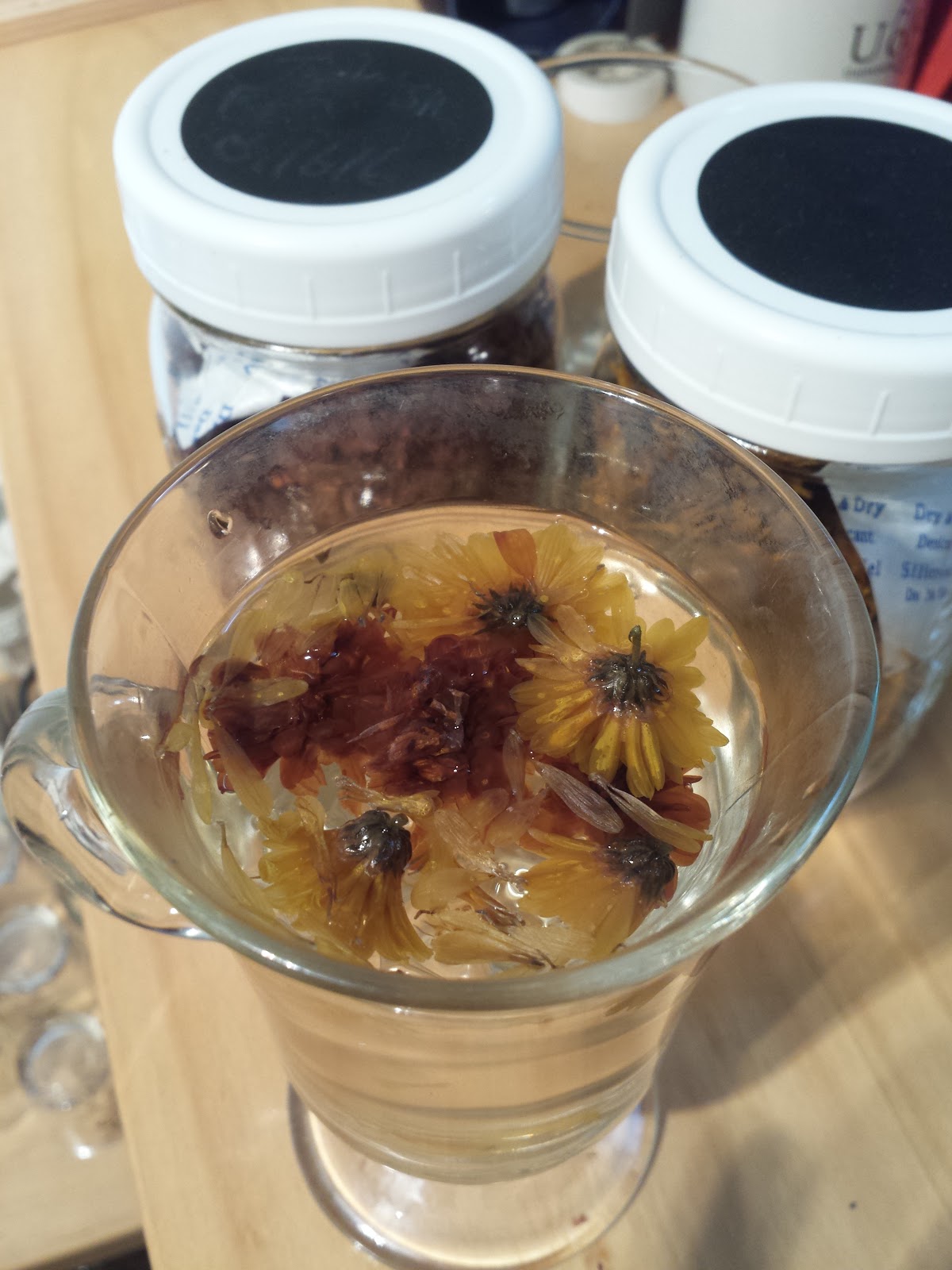
Chrysanthemum (菊花 Ju Hua) is a common Chinese medicinal herb, usually steeped into a beverage and slightly sweetened. Unlike most herbs, chrysanthemum actually TASTES GOOD. I served chilled honeyed chrysanthemum tea at our grand opening party couple years back. Some people actually asked for the recipe. You can buy tightly-packed dry chrysanthemum at the Chinese supermarket but it is quite easy to grow your own. And here's how.

In late August, when the garden centers start to put the chrysanthemum out, buy a couple. They are cheap. People use them like disposable flowers but if you plant them, they will come back year after year. Plant them as soon as possible in full sun. The more time they have be become established before winter, the better chance they have. Ideally, they should be in the ground by the first week of September.

Do nothing for a while. Wait for them to die back with when the hard frosts and DON'T cut them back. Around Thanksgiving, cover them with 2-3" of mulch.

Pull back the mulch in March and check for new growth. They might be a bit tender at this time and can die back with spring frost. But by April they should be back. Now you can cut last year's dead branches, spread the mulch and fertilize.

Some people pinch their mums, but I don't and there are still plenty of flowers. When flowers are in full bloom, it's harvest time. They are so prolific. You can pick for half an hour and not put a dent in the display.

Clean the flowers by soaking them in water with a couple drops for vinegar, drain and rinse. Then dry them in the dehydrator or in a oven at the lowest setting.

Store in jar. Traditionally, it's the white and yellow chrysanthemum that are used in tea. I've tried red and purple too. They do taste different and the infusion is slightly darker.

Monday, March 31, 2014

Tasting Two Green Teas


Today, I am drinking two green teas I had for a while. Green teas are valued for their freshness, so neither of these two teas I am drinking are at the peak of their flavors.

The first one is named “Taiwan Native Green Tea” that I bought at the “Double Fire Brand Store” in Yingge, a northern Taiwanese town known for its pottery. Taiwan is very Oolong-centric. Majority of the tea was made into Oolong for domestic consumption. Only a small area of northern Taiwan produces green tea.

The dry leaves are dark green, irregular string-shape, some tips with white hair. Dry aroma is surprising sweet and toasty.


Steep...

... and turn!

I am using a competition / cupping style tea set, consist of a cup with handle and lid with a notch in the rim instead of pour spout, a bowl, and a dish.  

The liquor is clear pale yellow with very slight green tinge. The aroma is forest, seaweed, and cornhusk. The flavor is grassy and mineral. The mouthfeel is lingering and astringent, especially towards the back of the tongue and mouth. The returning sweetness is strong, reminiscent of honey and dry fruit. Overall impression is rustic and serious.


On to the next tea.

The second tea I am drinking is “Bilochun Green Tea” sold by Ten Fu’s Tea, that Kevin got as a gift. Bilochun is one of the best known Chinese green tea, originated in Jiansu province, especially around Lake Tai area, nicknamed “Fragrant Shock” for its intense aroma. However, this is not the real Bilochun. The description on the package called this a “Fujian Bilochun”, “using Fujian province’s fresh spring tea leaves, hand-made with unique Bilochun style process”.

The dry leaves are smaller, more uniform, with higher percentage of white hairy tips. Dry aroma is very floral.

The liquor is gold on the side of orange, with lots of surface chrystals. The aroma is cedar, cut grass and jasmine. The flavor is citrus and wood. The mouthfeel is less astringent, but slightly acidic. The returning sweetness is less strong, reminiscent of under-ripe strawberry. Overall impression is lively, feminine and slightly affected.


Looking at the steeped tea leaves afterwards, I am surprised that the Fujian Biluochun shows signs of oxidation: rusty-red edges. This kind of explains the fruitiness in the flavor. I don't really know if that is a common characteristic of Biluochun, or just a sign of careless tea processing.  Maybe I will investigate further.

Saturday, March 22, 2014

Different Types of Tea


At Peaceful Water, we like to offer people tea. We use tea bags for convenience but we have a good range from sencha to Oolong to Puerh.  A lot of people are curious to know more about tea, so I decide to write a bit about tea.

CAMILLIA SINESIS


I will first clarify. When I talk about “tea” here, I mean the dried leaves of the “tea plant” camillia sinesis. Rooibos, yerba mate, mint and chamomiles are perfectly good tisane or infusion. Only “tea plant” produces tea.

DIFFERENT TYPES OF TEA


Tea can be different because of different cultivars or different terroir (borrowing some wine terminology here...). But usually when we talk about different types of tea, we are talking about how tea is processed after it's picked. The moment a tea leaf is picked, it starts to go through enzymatic oxidation. In another word, it starts to wilt. Similar to when an apple is cut and left in contact with air, the apple will turn brown. The bright green tea leaf will wilt and turn brown. The enzymatic oxidation can be stopped at any point by applying heat.

If you don't let the tea oxidate at all, you will get green tea.

If you let the tea oxidate completely, you will get black tea (called “red” () tea in Chinese for the color its liquor, to differentiate it from “black” () tea, such as Puerh, which steep to a thick brown liquor, sometimes as dark of soy sauce!)

Anything in partially oxidated is green-blue () tea, best known as Oolong, usually roasted to some degree.

Post-fermented tea, best known as Puerh, is unoxidated or partially oxidated tea dried at low temperature, pressed into cake, then left to age in a warm humidified environment, until the tea undergoes microbial fermentation and further oxidation, transforming the flavor and mouthfeel of the tea. Or the aging process can be artificially sped up in an controlled environment before pressing the tea in to cake.

Less common variations are white and yellow tea. White tea is very lightly oxidated then dried. Yellow tea, is briefly fermented in an anaerobic environment before drying

TASTE OF TEA


When I was living in Toronto, tea had became fashionable and there were many tea shops. They usually carry hundreds of different blended and flavored tea. To sell their tea, they let you smell them. They usually smelled fabulous. Vanilla, spices, fruit peels, flower, ginger. (Notice how they never smelled like “tea”?) Drinking those teas were always disappointing. They usually taste flat and bland. As if people believe tea to be scented hot water and nothing more!

I do like to smell my tea. But I like my tea to have flavors too.

I believe that good tea should have depth of flavors that reveal itself in stages. First, the liquor hits your tongue. You might taste the vegetal, seaweed flavor in sencha; the honey, fruity tones in Darjeeling; or the floral quality in Anxi Tieguanyin. Then, the liquor travel through your mouth. You might feel the astringency of a Oolong; or the velvety mouth feel of a Puerh. Lastly, after the liquor had gone down your throat, a new wave of sweetness arise from the back of your throat. Jinxuan's creamy taste might yield to a sweetness reminiscent of sugarcane.


A good tea should give you all these stages, and maybe more.

CURRENT NOTABLE TEABAGS


Right now we have a couple interesting tea bags.

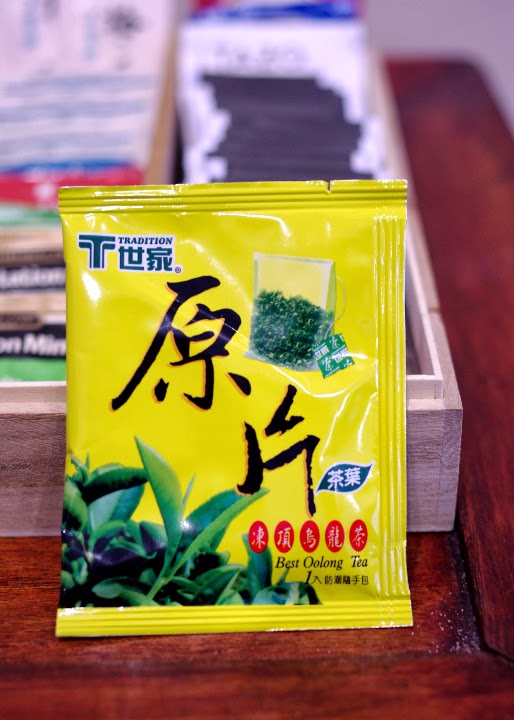
This Oolong teabag is actually made with whole leaves, as opposed to the broken, crushed, or sometimes dust leaves in regular tea bags.  It takes a while longer for the leaves to open, but it has solid flavors and can be steeped multiple times.  

This is Ume Konbucha, made from plum (ume), sea kelp (konbu), sugar and salt.  It's technically not a tea and is an acquired taste.  There are theories suggesting the trendy fermented sweet tea beverage "kombucha" got its name from konbucha due to the similarities between their sweet & sour flavor, or the appearance of the thick bacterial growth to sea kelp.

So, That's it for today.  Next time when you come to Peaceful Water, have a cup a tea!